
Last Spring we spent a week in Walcha, a town in country NSW. While we were visiting, we went to our friend Luke’s new property about ten minutes out of town. They are building a beautiful new home on top a hill with panoramic views of the countryside. It’s stunning.
I was reminded of the last time I was out with Luke and he drove me around the property. He explained the different contours of the land, the placement of the dams, and the plans for the house. He also outlined how and why the fences ended up in their final positions.
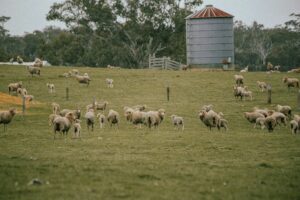
Apparently, when you first place your livestock (in this case sheep) on the property you don’t go straight in and fence everything off straight away. Instead, over a period of weeks you observe the ways that the sheep move across the terrain. You take note of where they congregate. You pay attention to the paths that they follow as they move from one place to another.
Only then are you in a position put the fences in their appropriate places. You still need to contain the sheep, you still need to be able to move them where you need them to go. But having paid attention to the natural patterns of the sheep, you can now work with them rather than fighting against them. You can put a gate along the path that they are already following. Your fences not only stop the sheep, they serve the sheep.
Shepherding the Flock of God
A week later, we moved to Katherine, an outback town in the Northern Territory. I wasn’t going there to tend sheep, but to be pastor a congregation. As Peter writes to church elders, the task before me was to:
Shepherd the flock of God that is among you, exercising oversight, not under compulsion, but willingly, as God would have you; not for shameful gain, but eagerly; not domineering over those in your charge, but being examples to the flock. (1 Peter 5:2–3)
Whatever else it might mean to “exercise oversight”, at the very least it requires paying attention. Like Luke taking the time to observe his sheep, I have had to take the time to get to know God’s flock in Katherine. I have needed to pay attention to the ways that God was already working in their lives rather than imposing my own agenda upon them.
Of course there will be a need to lead and guide; to correct, rebuke, and encourage (see 2 Tim 4:2). There will be a time to put new structures in place and establish new ministries. But having paid attention, I will aim for these efforts to work with and for the people rather than over and against them. Only then will they exist to serve the flock of God.
Being slow and cautious to make sweeping changes is surely wise. Sometimes, however, I get the sense that when some people repeat such advice, the end goal they have in mind is to build enough trust so they can eventually just do what they want! This seems to be a very gentle form of domineering, but domineering nonetheless. Paying attention, therefore, is the necessary corollary to taking time. This kind of oversight requires a genuine openness to a whole range of possibilities and willingness to imagine a future that is beyond what you have seen or experienced in the past.
God’s Flock, Not Ours
Such shepherding is not about begrudgingly biding your time until the real ministry can begin. It is a willingness to wait and watch for all the ways that God would have you serve his people. Which is surely the key insight at the centre of those verses in 1 Peter: they really are his people—“the flock of God that is among you” (verse 2).
Luke owns his flock in Walcha. They are his, and this is reflected in the loving attention with which he tends to them. The church in Katherine, however, is God’s flock. They do not belong to me, but to our Chief Shepherd Jesus, who loved them and gave his life for them. How much more, then, ought I to shepherd this flock with that same kind of loving attention.