

I live in a place, and time, far removed from the setting of the world’s most famous book. I don’t know Hebrew, I don’t know Greek; I can only read its authors through translation.
Long ago, letters became words which became sentences. People multiplied, languages developed and evolved. We began to count the days, also the months; to stack the years in decades, to celebrate the centuries. Scrolls were inscribed, read, rolled, unrolled; and rolled back up again. Poems, genealogies, prophecies, histories, mysteries, revelations—written and rewritten, sent, received, shared and reproduced. Babies were born, grew up, grew old, returned to dust. Rulers rose and fell.
I read far from the burning middle of the map, from an island near one of its icy ends. I read long after the people—long after the action—that this ancient book describes. Long after its last-born author walked and slept and wrote and spoke; then walked and slept and wrote and spoke no more. But the stories transcend culture, also time. And the words are so familiar I forget I am a foreigner.
The Foreigner Is Me
Forgetting makes me ask about the people and the places that the message hasn’t reached, as if it’s not been rippling, radiating, since the moment that the stone (you know the one) was rolled away. Forgetting makes me think of those far off. That was once this island, but those words came even here. Those words, that explanation, that hope, that invitation, they have spread and they spread still, today. What about the foreigner? The foreigner is me. The nations? Mine is one. I forget how far the message came — to come to me. My language isn’t one of just a chosen few, it’s one of many.
Grateful for Translators
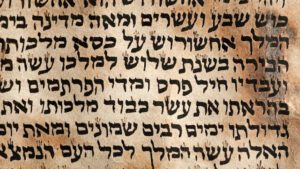
I’m grateful for the translators, who turned words from tongues I couldn’t understand, into words I could; who made painstaking decisions, who agonised and laboured, to share not only meaning on a page—but the chance to meet a person; embrace a saviour; kneel before a king. They broke barriers, built bridges, replaced lines this “gentile” couldn’t comprehend, with lines she could, to share a life-giving, sense-making revelation: עִ מָּ נוּאֵ ל in Hebrew Ἐμμανουήλ in Greek; God with us. To ensure more could know and call upon his precious name; could escape dark, could enter into light. Once lost; now found; but always, always, loved.
Who Did I Meet?
Who did I meet inside those pages, in those words, now written with my alphabet, now spoken in my tongue? One who invites us, one and all—and does so by so many means—to come to him. One who prepares a table in a house with many rooms, one who stands at the door, and knocks. All I had to do was let him in. Let him wash my filthy feet, let him change my dirty clothes, and rejoice as he said, in the language of my heart, “Well? Come.”
This piece was written for the 2026 Pilgrim Artists Festival in response to the theme “welcome”.