Since publication in 2024, Practicing the Way has made some serious waves, selling over half a million copies within the first year of release. John Mark Comer presents his model of ‘apprenticeship to Jesus’ as the solution to the “problem of the so-called human condition” (p. xv). The book is for those investigating the Christian faith, those wanting to take their faith more seriously, and those who feel stuck in their Christian growth.
Comer’s books, podcasts, and sermons have had an impact on Christians I know here in Australia. In some ways, the book’s success is hardly surprising. Comer, a former pastor in the secular city of Portland, demonstrates a clear grasp of our cultural moment, as well as the ability to persuasively engage with a younger Christian audience. However, I ultimately found myself disappointed with the less-than-helpful answers that the book provides.
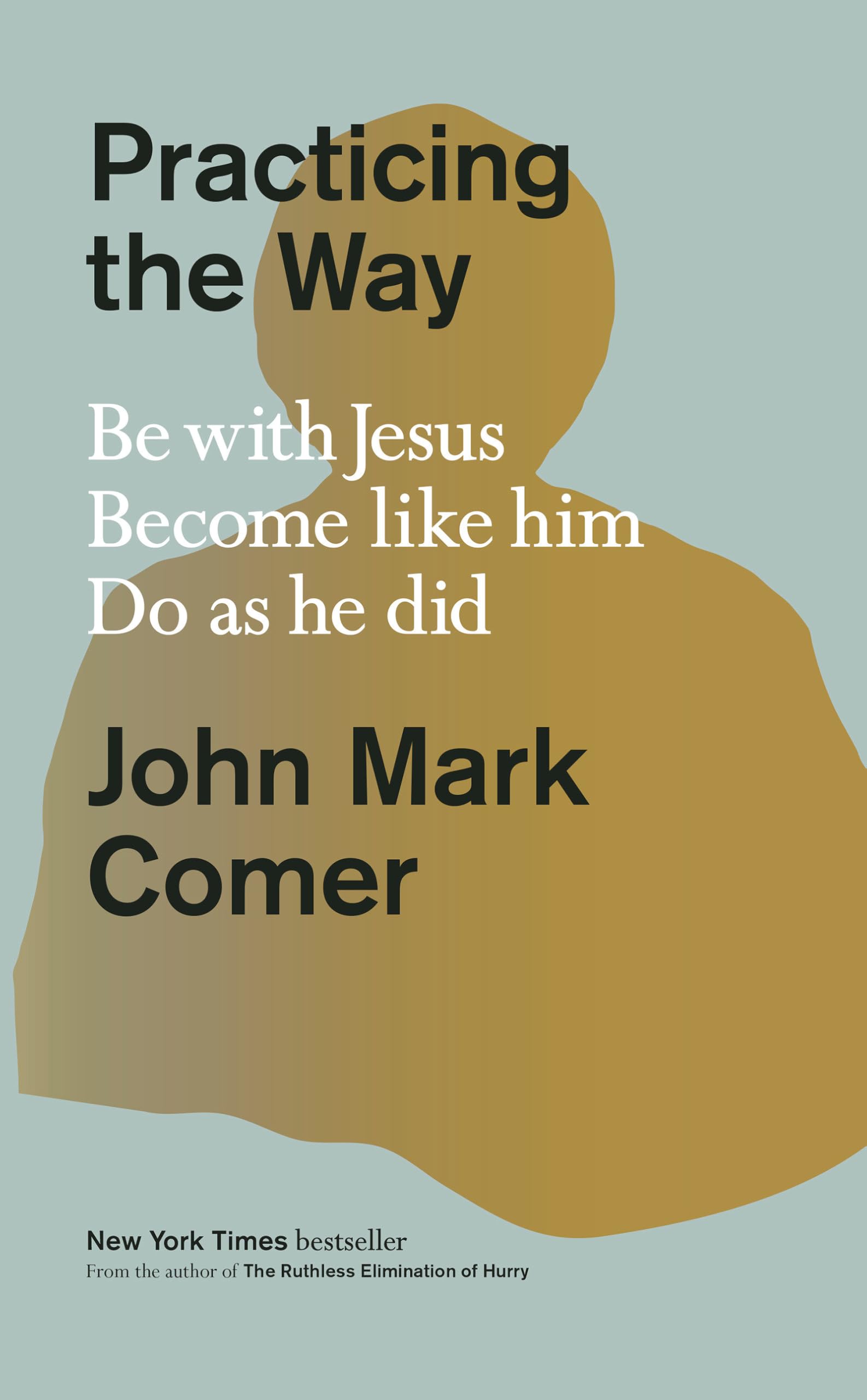
Practicing the Way
John Mark Comer
We are constantly being formed by the world around us. To be formed by Jesus will require us to become his apprentice.
To live by what the first Christian disciples called a Rule of Life–a set of practices and relational rhythms that slow us down and open up space in our daily lives for God to do what only God can do–transforms the deepest parts of us to become like him.
This introduction to spiritual formation is full of John Mark Comer’s trademark mix of theological substance and cultural insight as well as practical wisdom on developing your own Rule of Life.
A Bird’s-Eye View
In the introduction, Comer recasts Christian discipleship in terms of a first-century apprenticeship under a rabbi, noting that Jesus was often addressed by this title (Mark 9:5, John 1:38). The aims of such an apprenticeship were: to be with your rabbi, to become like your rabbi, and to do as your rabbi did. This then becomes Comer’s framework for our own apprenticeship to Jesus.
In part 1 (“Be with Jesus”), Comer describes an apprenticeship to Jesus as a cultivated relational connection (“abide in me”, John 15:1-11). Part 2 (“Become Like Him”) describes an apprenticeship to Jesus in the language of ‘spiritual formation’ as Jesus transforms us into the kind of person that he is. In Part 3 (“Do as He did”), Comer calls on apprentices of Jesus to adopt his spiritual practices and to carry on his work in this world. This final section contains the main lesson of Comer’s book: the nine spiritual disciplines that constitute a basic ‘Rule of Life’ for Christians today.
None of this may seem particularly controversial, but the devil is in the details of Practicing the Way. In the rest of this review, I want to highlight three aspects of the book that are typical of Comer’s approach. In each aspect he rightly identifies a problem in contemporary Christian discipleship but ultimately fails to provide an adequate solution.
Apprenticeship and the Gospel
In the introduction, Comer laments the sorry state of discipleship in his native America, observing that whilst 63 percent of people there identify as Christians, only around 4 percent (by his reckoning) are active apprentices of Jesus (p. 15). And we can sympathise. It’s always disheartening to meet people who identify as Christians but don’t seem to have been moved by the grace of God. And it’s even more discouraging to see people who were once eager and active Christians begin to drift into complacency. He identifies a real problem. But he then offers a questionable solution.
Comer blames this widespread complacency on the preaching of an inadequate gospel. Quite rightly, he claims that “how you understand the gospel is the linchpin of how you approach (or don’t approach) discipleship” (p. 19). He then provides this example of the ‘inadequate gospel’:
“You are a sinner going to hell.
God loves you.
Jesus died on the cross for your sins.
If you believe in him, you can go to heaven when you die” (p. 19).
To be fair, Comer makes clear that he believes everything in the presentation above. However, his key concern is that “this version of the gospel has no call to apprentice yourself to Jesus” (p. 21). Here, Comer begins to skate on thin ice. Comer’s solution to lazy discipleship seems to fold Jesus’ call to discipleship (ongoing sanctification) into the offer of the gospel (free justification).[1] Saving faith always leads to active discipleship (James 2:17), but justification and sanctification should not be confused. Comer departs from the unconditional gospel offer of Jesus (Matthew 11:28-30) and his apostles (Acts 16:30-31; Romans 10:9-10) in this schema, and seriously risks confusing or losing the gospel message itself.[2]
Apprenticeship and the Love of God
A second area in which Practicing the Way falls short is in its teaching on prayer. The first goal of an apprenticeship to Jesus is cultivating “a with-ness to Jesus as the baseline of your entire life” (p. 35). Comer acknowledges the difficulty of achieving this awareness in our world—our minds so often drift to our to-do list or our phones, rather than to God. Again, he identifies a real problem. But again, he provides an inadequate solution. Comer’s remedy for our lack of heavenly mindedness is contemplative prayer, which he describes as “the apex of Christian spirituality” (p. 47). Taking Ignatius of Loyola as his guide, Comer prescribes a form of wordless prayer: “look at God, looking at you, in love” (p. 47). Contemplative prayer is needed, he argues, because all relationships, including our relationship with God, reach a point “where words and even thoughts no longer carry you forward towards intimacy” (p. 51).
Comer’s insistence that words can limit intimacy seems like extremely questionable relationship advice generally and is especially counterproductive given the Bible’s presentation of God as a God who speaks (Genesis 1:1; Matthew 21:33-41; 1 Corinthians 14:14–15). Indeed, Yale historian Carlos Erie writes that Ignatius of Loyola consciously developed his practice of contemplative prayer as “a thorough repudiation of Protestant theology” (p. 455).[3] This puts Comer’s promotion of this practice at odds with the important place that he assigns to Scripture elsewhere in the book. Unfortunately, this example of theological and practical confusion is far from unique. Throughout Practicing the Way, Comer freely quotes Eastern Orthodox scholars, business leaders, self-help gurus, and people from all kinds of philosophical and theological traditions in a seamless way that reveals an underlying lack of discernment and cohesion.
Apprenticeship and the Spiritual Disciplines
A final area in which Comer’s book disappoints is his commendation of spiritual disciplines and an overarching Rule of Life. This section begins with a series of helpful insights. For instance, Comer notes that all of us have a de facto ‘Rule of Life’, seen in our morning routines, our work days, and our regular activities. The question isn’t: ‘Do you have a Rule of Life?’, but ‘Does your Rule of Life lead you into a deeper relationship with Jesus?’ (p. 163). This is a helpful challenge for many of us, who can so easily drift along in life. Comer’s alternative to this listlessness, is the formation of a ‘Rule of Life’ comprising nine practices: sabbath, solitude, prayer, fasting, Scripture, community, generosity, service, and witness. Together, these “nine core practices from the Way of Jesus form a time-tested trellis that is conducive to deep inner healing and overall life transformation” (p. 190).
Whilst many forms of these practices can be biblical and helpful, many of the details in Comer’s Rule are worth questioning. For example, he states that any habit observed in Jesus’ life – including things like walking in nature or climbing a mountain — can qualify as legitimate spiritual disciplines (p. 181). This definition is both too inclusive and too exclusive. Why focus on the minute details of Jesus’ life at the expense of the rest of the Bible’s commands? And if anything that Jesus does qualifies as a spiritual discipline; how am I meant to know which of them really matter? A narrow focus on spiritual disciplines risks distracting us from the more ambitious call the Lord Jesus gives: “to observe all that I have commanded you” (Matthew 28:20). Another frequent criticism of Comer’s use of a ‘Rule of Life’ has been the apparent lack of realism. Whilst he insists that a Rule should be adaptable, the sheer number of practices risk becoming a burden amidst the busyness of life. Which young parent, for example, can find regular time to practice silence and solitude? This lack of realism is perhaps unsurprising, given that Rules of Life, such as The Rule of St Benedict, were originally designed to rigidly govern the life of a monastic community, not the everyday ‘secular’ disciple.
Some of the insights and challenges scattered throughout Practicing the Way might be helpful, but John Mark Comer’s lack of biblically convincing answers leaves much to be desired. As a result, I don’t recommend picking up this book as a guide for renewed discipleship, especially when there are many others that provide much more solid answers on the topic of spiritual formation — such as Matthew Bingham’s A Heart Aflame for God, or Allan Chapple’s True Devotion. For those who do read Practicing the Way, I recommend careful discernment of Comer’s use of Scripture, the variety of sources he engages with, and the practical suggestions that he offers.
[1] Comer himself notes this danger, but proceeds regardless. He writes: “the relationship of some Western Christians to the gospel is passive” – which I believe it is in terms of justification. He also accuses the Western church of taking more care “to avoid ‘works righteousness’ than to avoid sin” (p. 23).
[2] For more on these gospel distinctions, see Sinclair Ferguson’s excellent book The Whole Christ.
[3] Carlos Erie, Reformations, 455. Quoted in Matthew Bingham’s A Heart Aflame for God, pp. 30-31.