
Thom Rainer’s book The Anxious Generation Goes to Church: What the Research Says about What Younger Generations Need (and Want) from Your Church is a short, easy, and insightful book to read.
Anxiety and the Generations
Rainer begins by offering an overview of the differences between the generations in chapter one. His overview is concise and clear for anyone who is unsure about the difference between a younger person who is in Gen Y or Z, for example. Since this book takes its title from Jonathan Haidt’s ‘The Anxious Generation’, chapter 2 delves into research which describes how the next generation have been shaped and are being shaped through social media and its ever-present availability on their phones. As both a parent of teenagers and as a minister to young people I found this chapter both helpful and alarming as I was confronted by the data. Causing some alarm is, however, the point. Rainer wants us to think deeply about these problems so that we might consider how the church provides answers and hope to them!
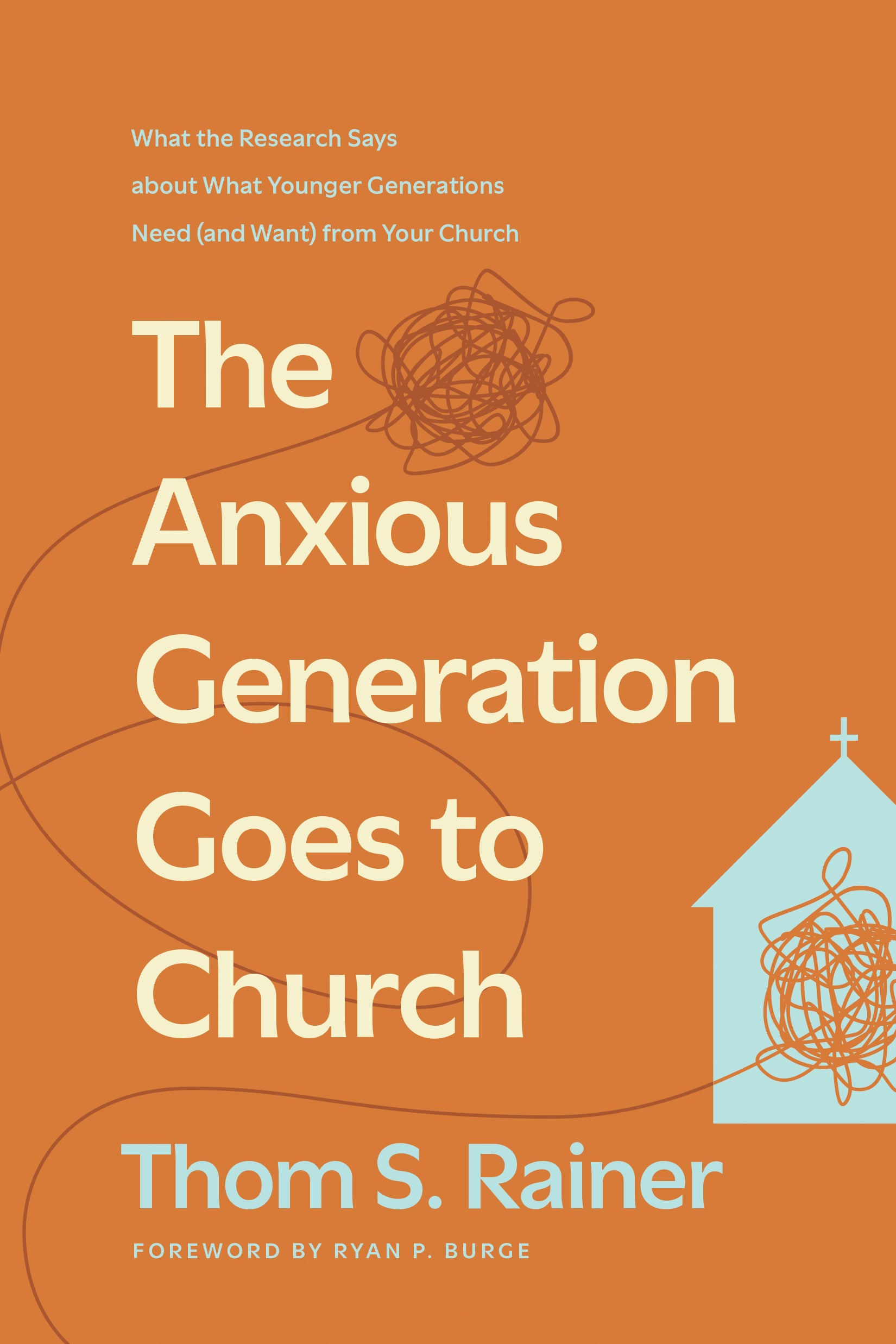
The Anxious Generation Goes to Church: What the Research Says about What Younger Generations Need (and Want) from Your Church
Thom S. Rainer
Purchase from ReformersThe Anxious Generation Goes to Church: What the Research Says about What Younger Generations Need (and Want) from Your Church
Thom S. Rainer
Thom Rainer views the church as God’s Plan A for helping this generation discover their true calling and thrive in a purposeful and genuine faith community. In this book, Thom explores research that reveals that the anxious generation is yearning for meaningful community and is waiting to be invited in.
To help the church provide answers to young people, Rainer surveys further research highlighting the decline of churches (chapter 3), the perception of young people towards church (chapter 4), and what the church might offer young people today (chapters 5, 6, and 7). Rainer’s use of statistics, anecdotes, survey results and quotes are compelling and challenge our assumptions. For example, Rainer’s research on pages 65-70 on societal responses to the church are fascinating; particularly his conclusion of “If you invite them, they will come” (p. 70). While this strongly resonates with the churches with which I work, there is still lots to consider and implement, particularly in our communications and integration spaces.
Moreover, as part of a wider denomination that is experiencing change and considering how revitalisation might be undertaken, I felt that there is also a lot in his writing that our churches need to hear and to change. I found this specifically the case in chapter 6 as Rainer unequivocally states that “secularists are asking churches to look beyond themselves to a society that is lonely and hurting” (p. 100). Rainer’s following assertion in the next sentence that, “Sadly, many churches have turned inward, even as the culture pleads for them to look outward” rings true to what I often hear and experience in many of our churches today.
Implementing Change
To assist churches to implement change, Rainer also includes a few chapters on what this might look like in the church today. Chapters 8 through 11 offer practical and principled opinions on how our churches might accommodate and reach young people. As I read these chapters I was encouraged that the author does not shy away from saying difficult things that churches need to hear. I too have noticed that statistically people in our churches are generally attending less regularly, fewer are involved in bible study groups than we would like, and serving is increasingly viewed as an optional extra. But Rainer doesn’t pretend to offer silver bullets or easy solutions to these issues. As such, his suggestions were insightful and challenging while also being realistic and hopeful. I love his answer to “Where to begin?” is with prayer (p. 156), but that this is also balanced with the challenge to “prepare for things to get messy” (p. 161).
Necessary Reading
I read this book over a period of several weeks when I was running and attending various conferences. I found the book easy to pick up and follow despite days between some readings. It could also very easily be read in one sitting! This is because Rainer’s style of writing is simple and straightforward, making it accessible for anyone to read. I would however consider it necessary reading for youth or young adults pastors, and for those who manage, supervise, or lead such practitioners so that they might better understand the importance of such ministry, or for churches that have a general yet genuine desire to reach younger generations and are not able to clearly articulate their why or how of ministry to younger people.
As a minister who serves in all three of those categories, I found myself a little uneasy at certain points as I read. Upon reflection, this was because I see Christ as the answer to the searching of the Anxious Generation more than the church. The vision of the church I work for is to reach people with the beauty, truth, and relevance of Jesus. I think that Rainer could have strengthened his book by highlighting the need for young people to not only connect with the church but with the Lord who established his church in love and who desires all to be saved. Nonetheless, I will be recommending this book to my staff and colleagues!