


There are so many evangelistic books in the marketplace that it often becomes too hard to know which to read and give away, so in the end we don’t give any away. That may be because there are so many goals to meet in writing an evangelistic book; the author must decide between multiple ‘goods’ which often involves compromises.
Decisions like, whether to:
1) Write a book that is helpful for anyone or one targeted at a specific group. The balance is strongly tipped toward the generic book. There is a paucity of evangelistic books targeted at specific groups that claim a Christian heritage. I suspect this is because their very existence proclaims ‘your construction of faith is wrong.’ We do not like ‘rocking the boat,’ so these types of books are rarely written.
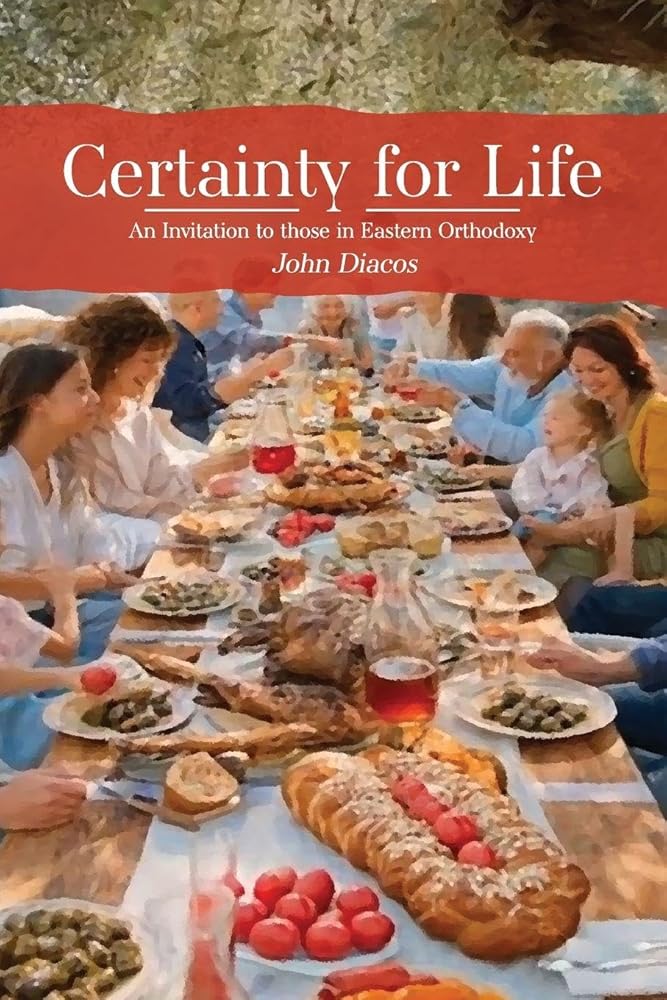
Certainty for Life: An invitation to those in Eastern Orthodoxy
John Diacos
Do you seek to know God more deeply and live an abundant life today? Would you like to be confident that God will welcome you into heaven? Reflecting on his understanding of the ancient texts with deep Christian experience, the author answers these questions and guides readers towards a meaningful and secure relationship with God.
2) Frame the content doctrinally or gently engage the reader emotionally. No one wants to alienate the reader, but how do you proclaim truth and refute error without explaining doctrine?
3) Or write for the person you are seeking to evangelise, or for their friend who wants to share the gospel with them. This is an important decision because not many people will independently select and read an evangelistic book without it being promoted or given by a friend.
Certainty
John Diacos has navigated these decisions and penned a book titled Certainty for Life: An Invitation to Those in Eastern Orthodoxy. It is a book that declares from its subtitle and cover photo to its back cover biography that its audience is those of an Eastern or Greek Orthodox heritage, with the goal of explaining how much more there is to Faith in Christ than what the Orthodox Church has held out to them. But Diacos writes with an obvious warmth and care for people from these backgrounds, in the hope that they too may discover the grace of Christ just as he has done. Correcting the teaching of the Orthodox Church is a bold decision as the very name ‘Eastern Orthodox’ is a self-declaration that they already have right beliefs.
Certainty for Life is structured to present the gospel clearly, but the tone is personal. The author uses his journey to faith (and stories of others’ faith story) as a vehicle to carry the reader forward. The book is also unashamedly and deeply doctrinal and theological. Each chapter takes the reader through Biblical doctrines. I consider it to be one of the most rigorous and integrated doctrinal statements available. The connection between each doctrine is clear with the goal of bringing the reader to the point of joyful submission to Christ.
There are four familiar parts to the book. Part 1: ‘The Unwelcome Certainty’ where our need and failure are shown; Part 2: ‘The Easter Solution’ focusing on the work and accomplishment of Jesus; Part 3: ‘How Must I Respond?’ discusses the need for, shape, and benefits of repentance; and Part 4: ‘Where to Now?’ is an exhortation to commitment to Christ.
Insightful
Each chapter contains stories of the author’s own journey to faith, as well as stories from many others who have walked the same pathway. It is a book aimed at the Orthodox person who is curious or hoping for more than they have now. Yet John also writes for those who desire to help their Orthodox friends know Jesus.
Diacos’s experiences and expertise come to the fore in achieving his goal of presenting the gospel compellingly to those with an Eastern Orthodox background. His experience growing up in Orthodoxy (and the experience of many Orthodox people) was a knowledge about the Christian faith, and a willingness to affirm its truth without embracing the marvellous consequence that such knowledge demands the transformation of every aspect of life.
The author’s profound theological training and reflection enable him to explore doctrines at depth and to integrate their significance across doctrines and to life. John uses this to frame the content of his book. For example, the chapter headings on Part 2 are 6. Why did Jesus Die? 7. The Once-for-All Sacrifice, 8. The Eternal Priest, 9. Certain of a New Life, and 10. Certain Peace with God. These chapters begin with truths an Orthodox reader will affirm, then delve into the theological implications of these truths, so that they cannot be merely assented to, bringing the reader closer to a point of decision about surrender to Jesus.
Conciliatory
The personal tone and the theological rigour of the book makes it so valuable as a resource for Orthodox people. By commencing each chapter with agreed common ground, and then exploring the consequences of these agreed truths, it avoids the combative us/them, I am right/you are wrong binary interactions that can alienate the audience. The vulnerable, personal stories of vulnerability and joy at embracing the truths discussed contribute to this tone and carry the reader to the next point.
Audience
This book is both for the Orthodox person willing to explore the truths of the Christian faith they have been brought up in, and for friends who desire to know more of Orthodox belief and how to best disciple their Orthodox friend. In fact, the final seven-page chapter gives advice about how to be a guide and help your friends as they come to a clearer and deeper understanding of what God has done in Jesus. Diacos advises:
…I think the best place to start a gospel conversation with any individual is to first ask them what they currently believe. Ask them about their traditions around Easter, Christmas, baptisms, weddings. it will help you in understanding their position. In general Orthodox people love talking about their culture!’ (p. 226).
Though not intended for this purpose, the book is also a simple, but tightly argued and integrated systematic theology that any Christian would benefit from.
Improvements?
Could the book be improved? If the goal was to write an evangelistic tract for anyone, or to write a systematic theology that shows where Orthodoxy falls short then there would be suggestions. However, John has chosen to write a book that takes an Eastern Orthodox person on a journey from what they assume is true to conversion, and in treading this path he has done us a great service. The writing is warm, crystal clear, and very engaging. It not only fills an evangelistic void, but it also warms the heart with the gospel truths and stories of conversions. I have kept it within sight on my bookshelf so that every time I see it, I am reminded to pray for the salvation of those who bear the name ‘Orthodox.’ It is an important contribution as there are over half a million Eastern Orthodox people in Australia.
I have spent most of my ministry seeking to evangelise Greek Orthodox, and in that pursuit John and I have sometimes laboured together and sometimes in parallel with each other. I have great delight in commending this book.