
In The God Who Draws Near, Michael A.G. Haykin outlines Christian spirituality. What do you think of when you hear the word spirituality? Do you think of the phrase “spiritual but not religious”? Do you think of meditation or yoga or connecting to something greater than ourselves? Spirituality means different things to different people, and it is hard to know what it should mean to us as Christians.
Spirituality is defined from the Scriptures, which are the only foundation for truly genuine spirituality. Haykin’s background as a professor of church history and biblical spirituality at the Southern Baptist Theological Seminary gives his writing historical and theological depth, giving readers the confidence that these are not new and “in vogue” ideas. Instead, Christian spirituality is rooted in the Bible and in long standing Christian thought.
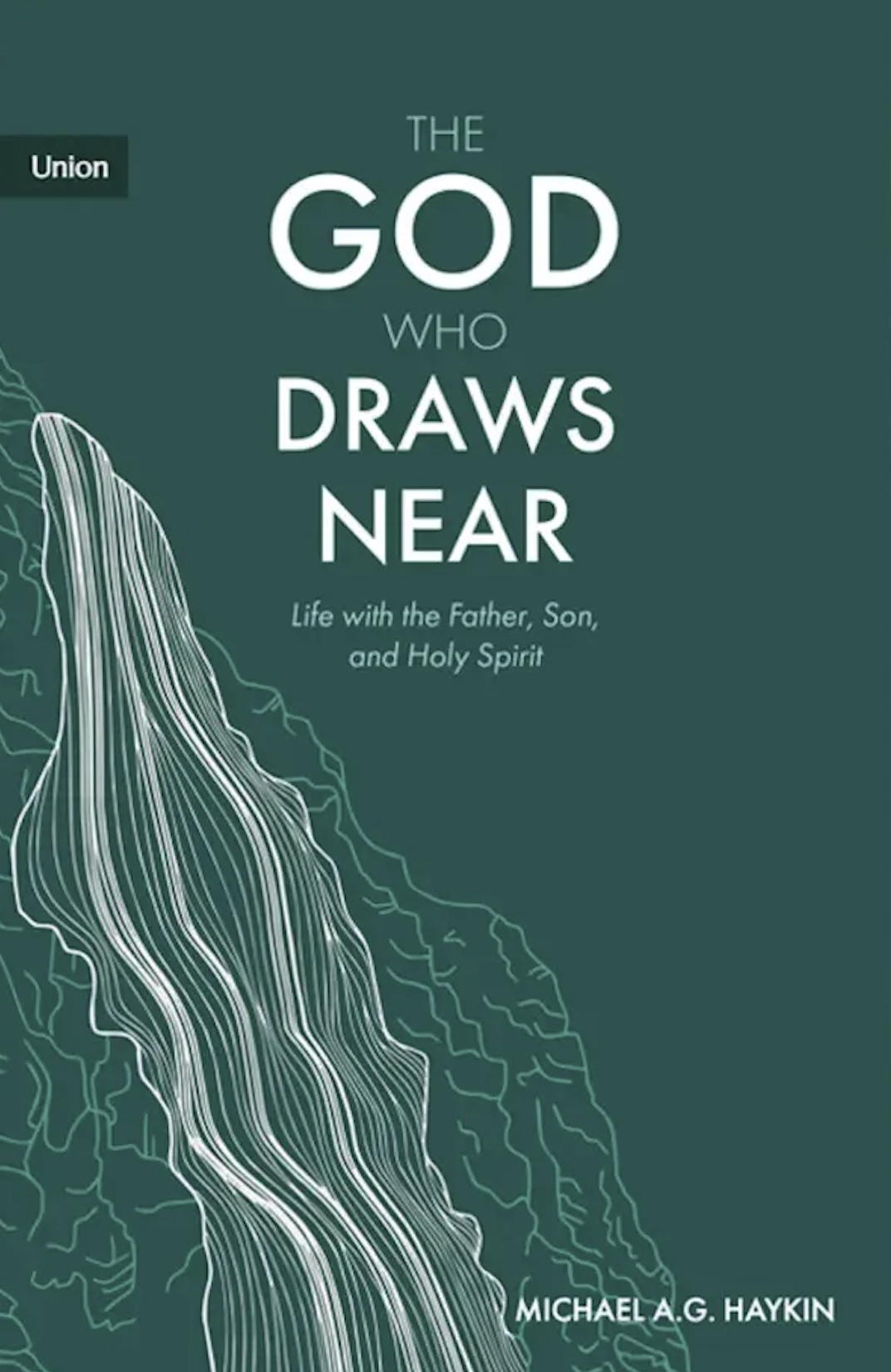
The God Who Draws Near
Michael A.G. Haykin
The God Who Draws Near seeks to retrieve the key elements of a biblical spirituality and what they mean for our daily lives. Spirituality is very much a positive buzz word today; but in so many of the ways that it is used, it muddies the waters as to the nature of true spirituality. By going back to the sources, as the sixteenth-century Reformers would advise, namely, the Scriptures, this book draws together the main threads of a biblical spirituality and provides foundations for believers to anchor their lives in truth, love, and a growing relationship with the living God–that very God who has drawn near to us in love and grace through Jesus Christ. May these pages help you to draw near to him.
Spirituality and the Trinity
The core of Christian spirituality is in the word ‘spirit.’ The Holy Spirit enables us to approach the Father by accepting Jesus as Saviour and Lord (Chapter 1). He makes God’s love real for us and is the one who “enables believers from various racial, social and religious backgrounds to find true unity in Christ and together worship God” (p. 20). He then dedicates a chapter to exploring the interaction of each member of the Trinity. Using evidence from various parts of the New Testament he discusses the nature of the Holy Spirit and how the Spirit works together with the Father and Jesus. The spiritual life of the early church is then discussed, along with the second century origin of the word Trinity. The beautiful testimony of Ann Griffiths (1776-1805) is a highlight of this section. Griffiths was grieved when she realised that her understanding of the Spirit as lesser than the Father and the Son was incorrect (p. 32). It is an error I am sure many of us have made and that we might consider as inconsequential, but Griffiths grieved her error intensely. This gives us some insight into the great offence it is to consider the Spirit as less than the other members of the Trinity. Readers are encouraged to consider their own relationship with the Spirit.
Spirituality and self-knowledge
Calvin’s Institutes are then drawn from to show that we only know ourselves by encountering God (Chapter 2). Haykin describes the experience of encountering God as a “deeply unsettling experience” as before God we are humbled and begin to see the core of our sinful hearts. Indeed, the Spirit’s role is to help us delight in God, per Galatians. Richard Lovelace is quoted: “the bible does not point us toward constant introspection. Instead, it helps us to focus on the privileges of being in Christ and enjoying fellowship in God” (pg.50). Unfortunately, there is no in depth discussion about what loving God and living in Christ looks like. However, he provided the base for each individual reader to start considering how this might be done for themselves.
Spirituality and Calvary
Jesus and the Cross of Christ is then discussed, noting how the Spirit and Jesus work together in redemption (Chapters 3-4). A particular highlight was learning about the way the Holy Spirit brings glory to Jesus, similar to how flood lights emphasise the beauty of a house (p. 57). This highlighted the selfless nature of the Spirit, equal to the Father and the Son but giving the glory to other members of the Trinity rather than seeking it Himself. The scriptures are the key for genuine spirituality, and the Spirit and the bible are never in disagreement. Haykin reflects on historical movements that have missed this key idea, using the Quakers as a specific example. Instead, he upholds the Puritan model whereby the Holy Spirit guides believers to see the bible for what it truly is: the Word of God. The book would benefit here with more detail about the Puritan model and how it differs from the Quakers, giving readers a more specific view of the Holy Spirit’s role in the lives of believers.
Spirituality and discipline
Another key and practical element of Christian spirituality are the spiritual disciplines (Chapters 5-7). The importance of prayer in Christian meditation is emphasised as Haykin considers both the difficulty we may find in praying as well as the delight that it grows in us. He also considers the necessity of meditating on the scriptures, noting that we should read them “slowly and with reverence” rather than for the purpose of “skills acquisition.” This chapter was particularly helpful for considering the practical applications of the deep theological truths which were outlined in the preceding chapters.
Spirituality and mission
Finally, spiritual friendship and mission is outlined (Chapter 9), In our society, “deep, long-lasting, satisfying friendships” are unfortunately difficult to find. In our “busy, busy world”, time and sacrifice are rare. Haykin talks about the historical question of friendship and the ways that Aristotle and Plato wrote on it, as well as the way that the bible sees friendship as an important part of life. Through this chapter he uses the example of Timothy and Paul and the way that Timothy played the part of a son to Paul (p. 132). This was particularly helpful, giving us concrete examples from the Word of God to guide us.
Haykin appears to finish his book abruptly without a formal conclusion, which gave me the impression that understanding spirituality does not end once the book is closed. Instead, we must consider our own understanding of spirituality and how it leads us to pursue prayer, seek spiritual friendships and serve through mission. As time goes on our understanding of spirituality may adapt and change slightly, but the basis should always be founded on Scripture, theology, and historical thought.