Dearest little one,
It was 8 a.m. I climbed out of bed, still heavy with sleep. I stepped into the bathroom to prepare for another day of work, but the sight stopped me cold—my underwear was stained bright red. It was still the second trimester.
I touched my belly, trying to feel your movements. I called the maternity ward, and the midwife told me to come in immediately. Your father leapt into action, packed a few things, and we made our way to the hospital while I prayed through tears. Oh, how I prayed.
An Impossible Choice
Given my medical history, I had braced myself for a long uphill battle when we tried to conceive. But then, there you were.
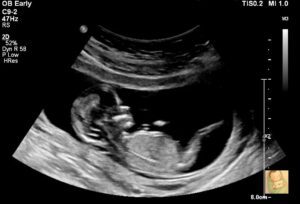
At the twenty-week scan, the sonographer mentioned that the placenta was low-lying and blocking the cervix. Since this was my first pregnancy, he said the placenta usually moves out of the way.
Two weeks later, I was bleeding.
I was wheeled into the birthing ward, and the doctors checked to see if my cervix was dilating. Thankfully, it wasn’t. They looked for your heartbeat while I waited with bated breath—and there it was, thumping steadily and loudly without a care in the world.
Since delivery was not imminent, I was admitted to the antenatal ward for monitoring. The NICU specialist team came to my bed and gathered around your father and me. They explained that each bleed carries risk, both to the mother and the baby. If the bleeding worsens or does not stop, it could lead to preterm labour. And if the placenta detaches too quickly or too much, it could cut off the oxygen and blood flow you needed to survive. In either case, we’d be facing an emergency caesarean.
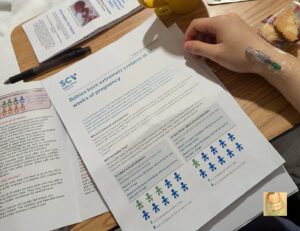
They explained that after twenty-four weeks, they would intervene medically. But at twenty-two weeks, your chances of survival are very slim. Only two-to-four babies out of ten live beyond their first year. And of those that do, the likelihood of severe disability is high.
They wanted us to decide, if you were born in the coming days, would we want them to intervene?
You would be smaller than my forearm, barely 400–500 grams in weight. Your skin would be paper-thin and translucent. You would be placed in an incubator, surrounded by wires, monitors, and machines. A ventilator would help you breathe, and a thin IV needle would be inserted into your umbilical cord to deliver fluids and medications. You’d need surgery, and your brain could suffer a haemorrhage, which is common for babies born this early.
The doctors wanted us to know what medical intervention would mean for you. Because every needle, every breath, and every surgery would mean pain, and even then, you probably would not survive.
I could, however, choose comfort (palliative) care. This allowed us to hold you without interruption from medical tests and procedures. It meant keeping you pain-free and spending every possible second together. And it also meant that we would be able to kiss you and say goodbye as you took your last breaths.
“So, if the bleeding doesn’t stop and you have to deliver soon, what will you decide?” one of them asked.
I felt a lump in my throat, and tears rolled down my cheeks as the doctors looked at me, waiting for me to speak. But I couldn’t. I couldn’t think in terms of statistics or cut-offs. Whether you were born at twenty-three or twenty-two weeks, I love you just the same.
It was an impossible choice. Part of me wondered if letting you go was the loving thing to do. Maybe there was a reason you weren’t meant to be in this world. If I loved you, I should bear the pain of loss so you wouldn’t have to suffer. I would get to hold and kiss you, instead of watching you through a plastic incubator.
But something deeper stirred within me. Love doesn’t only protect—it also hopes. And you deserved someone to hope for your life when you couldn’t yet hope for yourself.
So we told the doctors, “We want to give him a fighting chance. We don’t know how he’ll respond. If it’s not working, we’ll cross that bridge if we get there. But for now, please try to save him.”
I knew it was never truly in our hands. Even with every intervention, God could still call you home. But I could not withhold a chance at life. And I had to let God decide what kind of life that would be.
For the next few nights, I begged God for your life. I offered to trade mine for yours. I prayed the bleeding would stop and pleaded for mercy. I also told your father, with trembling resolve, that if it came down to your life or mine, he must choose to save yours (much to his chagrin). If I profess to love my Saviour who laid down His life for me, then I am compelled to lay down my life for you.
But in His mercy, the impossible choice never came. The bleeding stopped. Your heartbeat never wavered. God heard my cries and he sustained your life.
The Long Wait
When I was discharged, I expedited as many of the preparations as possible. I bought postpartum supplies, nursery items, premmie baby clothes, and packed a hospital bag. I knew I didn’t have much time left.
Sure enough, the bleeding returned. When it stopped, and I was discharged, my obstetrician warned that if this happened again, I’d have to be admitted for the rest of my pregnancy because the chances of a big severe bleed would only increase. “Paramedics can’t perform C-sections—and that’s the only way to save your baby’s life, and yours,” she warned.
She was right. Within days, I was back in the hospital with a heavier bleed. It eventually stopped, but this time, I wouldn’t be going home. I would remain there for the rest of my pregnancy, waiting for you.
Surrendering Control
In their hearts humans plan their course, but the Lord establishes their steps. (Proverbs 16:9)
I had to let go of so much. No walks around the neighbourhood, baby showers, or nursery painting. Social media became a trigger—seeing glowing mothers preparing for birth while I lay in a hospital bed sent me into shadows I didn’t know I could enter. I grieved my birth plan, though it was sobering to know that if this were happening a century earlier, this pregnancy would have claimed both our lives.
I spent sleepless nights poring through journal articles on placenta praevia. I did not meet any of the known risk factors for this condition; it was so rare that it only affected 0.5% of pregnancies, but I blamed my body just the same.
But God was peeling away the illusion of control. He was teaching me that he directs our story, even if we may not understand it. Because control is a burden we were never meant to carry, and true motherhood begins when we surrender our need to orchestrate every outcome.
I thought of the Roman centurion in Matthew 8—the one who believed Jesus could heal with just a word. The faith that moved Jesus. The kind of faith I longed to have: “Just say the word, and my servant will be healed” (Matt 8:8). So I said to God: “It’s up to you. But all you have to do is say the word, and he will live.” And then I let go.
Being Still
He says, “Be still, and know that I am God;
I will be exalted among the nations
I will be exalted in the earth.” (Psalm 46:10)
I spent over fifty days cloistered in a hospital. As days turned into weeks, I would wake to the same white walls and peer out the same window, watching the world move on while my life stood still.
But God was quietly working in my heart. He was shaping me for motherhood, even when I could not see it. Even when silence felt like absence, when waiting felt like wilderness, he was testing my heart: do I cling so tightly to you, forgetting that you ultimately belong to him? Was my longing for motherhood louder than my love for the One who gave it? Could I still call him good, even if he didn’t give me what I asked for? Could I still say, “The LORD is my God,” even if he took you home and left me heartbroken?
God was not just preparing me for delivery—he was preparing me to be a mother. Not the kind shaped by Instagram or Pinterest boards, but one refined by fire (1 Pet 1:7). He was showing me the idols I didn’t know I had—busyness and achievement had shaped my identity. But as I lay powerless in a hospital bed he was teaching me to be still and trust him, when everything in me wanted to rush ahead. To loosen my grip on timelines, comparisons, ambitions, and picture-perfect ideals. In the stillness of that hospital room, when the days blurred and time slowed, I began to learn what it means to mother by faith.
God is God. Because he is God, He is worthy of my trust and obedience. I will find rest nowhere but in His holy will that is unspeakably beyond my largest notions of what he is up to. (Elisabeth Elliot)
Because every mother will face moments that she cannot fix, cannot shield her child from, and cannot carry alone. And there will be hard times when we either spiral into fear and cling to our desires and plans, or rest in God’s grace.
I learned that faith is not passive resignation, but active trust in the One who sees what we cannot. It is kneeling before the cross and saying, “I do not understand, but I still believe you are good.”
Seeing God’s Goodness
The Lord is good to all;
He has compassion on all he has made. (Psalm 145:9)
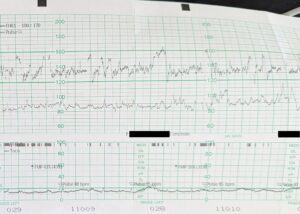
There were many blessings that I would not have experienced if I had not been hospitalised. Every morning, a midwife would wheel the cardiotocograph (CTG) machine into my room to monitor your heartbeat. It became a daily communion between you and me. Every day, I studied the rhythm of your life inside my womb, like the way your heart quickens when you kick. I learned to locate your bum, back and head; when the midwives came in for a check, I could point where your chest lay.
Friends came to keep me company and pray over us. Some brought food—blessings beyond measure when I’ve cycled through the same hospital meals for weeks. There were moments of deep laughter too, so much so that the midwives teased that I was throwing parties in my room.
I came to know they midwives and staff by name. They were kind, attentive, and compassionate. My obstetrician visited me almost every day. Over time, our relationship grew into something deeper than the usual doctor–patient dynamic. We traded stories between checkups, and she spoke tenderly of her beautiful children.
These were the quiet mercies of God, poured out in the mundane. It wasn’t dramatic or loud. But his goodness was steady, like manna in the wilderness. Sometimes we become so focused on our hardships that we miss the gentle ways he sustains us.
And now, in motherhood, I’m still learning to see it. When the nights are long and the crying relentless, when the laundry piles up and I feel unseen, there, too, are glimpses of grace. A sleepy smile. A friend’s message at just the right time. A moment to relax when I didn’t think I’d get one. Motherhood doesn’t always come with ease or applause. But if I pay attention, I see his fingerprints all over it.
Doing the Next Thing
Do it immediately, do it with prayer;
Do it reliantly, casting all care;
Do it with reverence, tracing His hand
Who placed it before thee with earnest command.
Stayed on Omnipotence, safe ‘neath His wing,
Leave all results, do the next thing. (Unknown, quoted by Elisabeth Elliot)
This season taught me to be faithful wherever God has placed me. At first, the hospital felt like a holding cell, but I began to see that God had work for me there, too. I could resent my circumstances or I could choose to serve. The way I lived through this waiting would speak of where my hope truly lay. Even within these walls, I could be the hands and feet of Christ.
There were fellow long-term antenatal patients. After my bleeding had settled, I was allowed slow, careful walks. I used those walks to visit other mums and sit with them in the uncertainty, reminding each other that we weren’t alone.
I learned to crochet and my obstetrician encouraged me to make beanies for stillborn babies and premmies—I was told the NICU always needed more. When one of the mothers suffered a major haemorrhage and lost her womb, I made sure her little girl received a beanie stitched with love.

We were mothers fighting quiet battles the world rarely sees. There were no finish lines or fanfare—just beeping monitors, IV lines, and prayer. I still carry these lessons. Because the work of motherhood is mostly unseen. There are days when I wonder if I’m doing anything that counts. The world cheers for women who bounce back and juggle it all with grace and speed. But I am learning that my presence is powerful, and I can trust that faithfulness in the small things will not go unnoticed by the One who sees all.
The work before me today—feeding, rocking, comforting, staying—is a sacred assignment. And when it comes from the hand of God, it is a privilege. So I do the next thing. And then the next.
When the Waiting Ended
Your father came to stay the night before the scheduled C-section. I kissed him goodnight, rested my hand on my belly, and whispered that I couldn’t wait to meet you.
Early the next morning something woke me. Moments later, I felt it: warm liquid pooling beneath me. I went to the bathroom and turned on the lights. Blood. I pressed the emergency button and the midwives came in. One of them gasped at the sight of the bathroom. Another hooked me onto the CTG. Amidst the chaos, I forgot to wake your father. He roused to the commotion, slowly realising what was unfolding.
My obstetrician wasn’t on call that night, so I assumed someone else would deliver you. But when they wheeled me into the theatre, there she was—in her scrubs, ready and waiting. She had come in just for us because she wasn’t going to miss this for the world. Moments later, your cries pierced the room, and relief washed over me. And when they placed you on me, my heart was full.

As I hold you in my arms now, I still marvel at how we got here. And now I get to witness the goodness of God written in your smile every single day. Above all, I pray you’ll come to know the One who not only saved your life, but sacrificed his own Son to save your soul.
I love you with all my heart.
Forever yours,
Mama
We recognise the painful and personal nature of this topic, and the different stories and outcomes potentially experienced by our readers. For crisis support readers can call Lifeline 24/7 on 13 11 14