

Seth Lewis helps readers learn how to respond to God as they contemplate nature in The Language of Rivers and Stars.
Right now, a marvel is unfolding off the east coast. It seems spectacular, even though it happens every year. Between May and November, 40,000 humpback whales migrate north to warm waters, then return with their calves. Bring binoculars and a lot of patience and you may get to watch a few of them swim, blow water, and even leap for joy.
I still remember the first time I saw a whale breach. All 30 tons launched out of the water and slammed back down with a power that somehow pales to that of its Creator. Every time I’m lucky enough to see one of these creatures, it feels like God has given me that gift to remind me of himself. Nature is meant to do this to us. We’re supposed to look with awe at leaping whales and glimmering stars and teeming ant colonies.
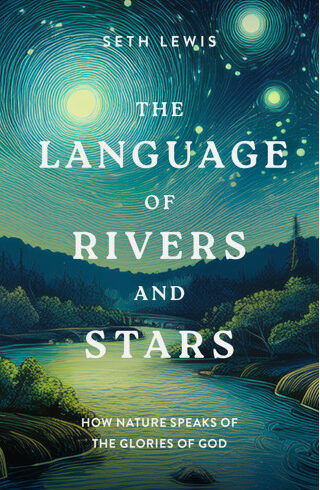
The Language of Rivers and Stars: How Nature Speaks of the Glories of God
Seth Lewis
Purchase from RefomersThe Language of Rivers and Stars: How Nature Speaks of the Glories of God
Seth Lewis
Seth Lewis helps us to experience God and the beauty of creation in an even deeper way by giving us a biblical understanding of what God is saying to us through the world he’s created for us. As we view the plants, the animals, the skies, the earth, the seas and everything else God has created through the lens of his word, we will experience heartfelt joy as we worship him for who he is and what he has made.
Outline
In the first part of this book (chapters 1–4), Lewis argues why Christians ought to pay more attention to the world God has made. He proposes a framework: we should discover the creation, interpret it rightly, and respond accordingly. In the second part (chapter 5–17), he traces the days of creation to put the framework into action. Lewis considers how we can discover, interpret, and respond to various parts of creation; everything from light to plants to humanity.
Discover
The first step in this framework can be the hardest. Our devices keep us inside, scrolling endlessly with our eyes glued on a screen. All the animals from Noah’s ark could parade past our windows and we wouldn’t notice. And the busyness of modern life leaves us so distracted that we have little time for reflection.
After you read Language of Rivers and Stars, you’ll want to break the cycle and step outside. Lewis encourages us to use our senses to experience the riches of God’s creation and cultivate our curiosity about things we might not get to directly observe. He introduces us to moles that navigate underground using magnetic fields, snakes that can see heat, and butterflies that take generations to complete one migration.
The more we delve into our world’s wonders through observation and research, the more reasons we’ll find to praise the Creator. I’ve found this to be true as I’ve become an avid bird watcher. More than ever before, I notice God’s hand as I hear a butcherbird’s warble or notice a fairy-wren alight on a tree branch for just a moment. If we open our eyes, we’ll discover no shortage of God’s miracles.
Interpret
Simply noticing the world around us isn’t enough. Anybody can do that. How do we observe details in the world and respond in praise to God?
Lewis teaches us that we can’t consider creation in isolation if we’re to learn the right lessons from it and respond properly. We need to consider both of the “two languages” God gives: his voice in Scripture and his voice in creation (p. 32). Lewis writes, “The art of interpreting creation is simply the process of understanding how the words of Scripture and the pictures of nature tell the same story” (p. 49).
If we’re to interpret nature correctly, we need to interpret it in light of God’s revealed Word. As an example, let’s return to birds. If we only observed birds in flight, without considering God’s truth, we may covet their apparent freedom. But Matthew 6:25–27 refines what kind of freedom they have. Lewis writes,
While we may see birds as a symbol of complete independence, God’s word tells us to look more closely as see that birds actually live in complete dependence on the provision of their Maker. The bird is free. And where does he or she go with all that freedom? They go to get food for their family.
By considering birds in light of God’s Word, we learn what true freedom is: trusting our Creator and living in obedience to the task he’s given us to do.
Interpreting nature this way was much more common in eras past, when people spent more time outside and were more connected with the natural world. I would have loved to see Lewis engage more with how Christian writers from the past have used creation as a means of spiritual formation. Readers interested in a historical perspective should refer to the chapter “The Natural World: Looking Outward” in Matthew C. Bingham’s recent book A Heart Aflame for God.
Respond
All our sharpest and most insightful observations about nature will do us little good if we don’t intentionally respond. That’s why a crucial part of each chapter in Language of Rivers and Stars is the directions for responding to the particular element of creation discussed in the chapter.
Above all else, we praise God with awe and thanksgiving. Lewis writes, “A true understanding of creation and faithful interpretation of its meaning should always lead us towards knowing, loving, worshipping, and following the God who spoke it into existence. That’s the whole point” (p. 56).
Nature teaches other lessons too, however. Watching the scurrying activity on an anthill should make us do more than marvel at those tiny bodies carrying disproportionate loads. We should also go back to our tasks more determined to work industriously at whatever God has given us to do (Proverbs 6:6–11).
As Lewis writes across various chapters, we Christians should “[trust] ourselves and our lives and our everything to the God who . . . upholds the stars” (p. 114), ‘”do our work in his sight, whether anyone else notices or not” (p. 121), and “[move] always forward, in faith, in hope, in courage and endurance” (p. 105). Creation teaches all these lessons.
I finished reading Language of Rivers and Stars ten days before my wedding, in a season of intense busyness and change. Late one night amid planning, I stepped outside and listened. I heard an unusual noise, the shrieking of bats. They were a reminder to me that even when I slumber, God is awake, feeding and sustaining all sorts of night creatures. My to-do list suddenly felt less formidable. God was in control, and he was worthy of my praise.