

Most of us have heard comments in church that make singleness sound second best. Whether married or single, we may even have spoken, thought, or acted in ways which give that impression ourselves. For years, Danielle Treweek has worked to challenge those assumptions and show the goodness of singleness. Single Ever After is the latest instalment in that effort. This book demonstrates why Treweek one of Australia’s finest theological minds.
What is singleness good for? Christians often answer that question by pointing to the extra time and flexibility unmarried people might have for ministry. That can be true. But is there more to say about the goodness of singleness other than what someone can accomplish with it?
Treweek draws on theological research and her own experience to show the goodness of singleness in light of the resurrection and help churches live accordingly. The book is for the whole congregation: unmarried Christians, their married friends, and the pastors who care for both (pp. 9–12).
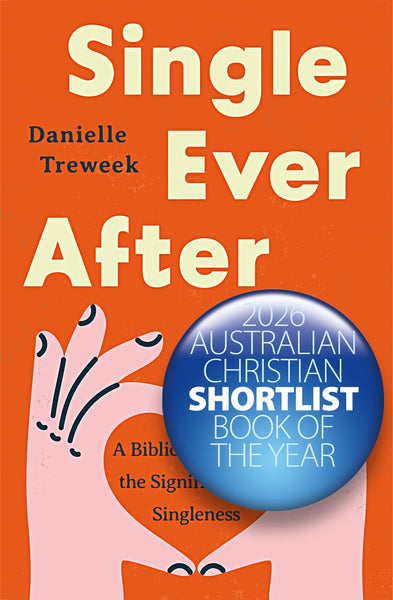
Single Ever After: A Biblical Vision of the Significance of Singleness
Danielle Treweek
Purchase from ReformersSingle Ever After: A Biblical Vision of the Significance of Singleness
Danielle Treweek
Singleness is often viewed as a “plan B” by our culture and the church, and sometimes by single people who feel they’re missing out on their “happy ever after”. Author Dani Treweek offers a thought-provoking reframing of popular conversations around singleness.
The Argument and Structure
The book’s central argument is that singleness has a goodness of its own: it anticipates the life we will all share as unmarried brothers and sisters in the resurrection. Treweek’s starting point is Jesus’ teaching that people will neither marry nor be given in marriage in the resurrection (Matthew 22:30). Marriage points towards the union between Christ and his church. Singleness points towards the relationships we share with one another as brothers and sisters in that church. Both help us anticipate eternity, when we will be in perfect union with Christ as brothers and sisters (pp. 17–22). As Treweek puts it, “We (marrieds and singles) are complementary—rather than competing—co-specialists in eternity” (p. 22).
This ‘complementary’ perspective shapes all seven chapters. Each addresses a familiar conception, or misconception, about singleness, followed by a “Living It Out” section applying the discussion to Christian relationships. The opening chapters (1-3) consider singleness’s purpose, distinguish being unmarried from being alone, and examine what Paul means by the gift of singleness. The middle chapters (4-5) explore choice and circumstance, and what undivided devotion to the Lord looks like. The final chapters (6-7) address sex, sexual identity, and self-control.
These discussions repeatedly return to the life to come. Readers are repeatedly invited to consider what Scripture tells us about how our future should shape what we think about singleness now. Then we consider what that means when we arrive at church, cultivate friendships, long for marriage, or struggle with temptation.
What I Appreciated
I most appreciated how she shows the goodness of singleness by looking towards the resurrection. Singleness’ value does not depend on an unmarried Christian being unusually productive, unusually content, or unusually free of sexual desire.
We readily recognise that marriage has theological significance beyond its practical benefits. A marriage can point towards Christ and the church even when married life is difficult. Treweek helps us extend that same careful thinking to singleness. As she writes of marriage and singleness; “Both situations are instrumentally good in this life. And both situations are intrinsically good because of the life to come” (p. 22). Singleness, too, can be good even when the experience of it is painful. Honouring singleness does not therefore require us to diminish marriage.
I also appreciated Treweek’s honesty about grief. Her account of singleness’s goodness does not silence the person who longs to marry, grieves the absence of children, or feels lonely within their congregation. She writes, “Indeed, your singleness remains a good gift even when you feel just the opposite about it” (p. 68).
Recognising God’s good purposes does not make every disappointment disappear. Treweek allows gratitude and grief to exist together, without making perfect contentment a condition of faithful singleness (pp. 67–70).
Married Christians and pastors have responsibilities here. A congregation that teaches the goodness of singleness should be a place where unmarried Christians experience belonging. Treweek’s discussion of the church as one family challenges us to consider whether our relationships reflect what we say we believe (pp. 24–25, 45–52). Her example of married couples greeting only each other during the peace makes the point sharply: even our Sunday habits can obscure the fact that we belong to one church family (p. 25).[1] As she puts it, “The church is one new family. And in that family, married and single people equally belong to each other” (p. 24).
Treweek also writes in a way that’s engaging and easy to follow. I had my phone read the book to me while I was riding my bike and could follow her argument easily even without looking at the text.[2]
Where I Wanted More
I wondered whether a little more explanation would help at two points. First, Treweek’s discussion of Luther and Calvin offers a persuasive challenge to particular teachings about sexual desire. I wonder, though, whether the book gives enough historical support for the link she draws between the Reformers’ teaching and contemporary sexual culture (pp. 120–123). Showing that Luther and Calvin spoke this way about sexual desire is one thing; showing how their teaching helped shape contemporary sexual culture requires a fuller historical argument.
Second, I wonder whether her interpretation of Matthew 19’s self-made eunuch as a divorced disciple who refrains from remarriage needed a little more explanation in the book (pp. 79–82). She acknowledges the brevity of her argument and points readers to a fuller online treatment. But the reality is that most readers probably won’t pause and read that then and there. Given that she already has the material at her fingertips, I would have welcomed another paragraph or two here. Neither reservation diminished my appreciation of the book.
Single Ever After left me with a greater appreciation of singleness and its place in God’s purposes. I’d love to see it widely read in our churches by married and single Christians alike. It gives us good reason to value singleness—and to think more carefully about how we speak and act towards those who are single.
[1] The Greeting of the Peace is a point in the service, usually before communion, where church-goers greet each other with the words ‘peace be with you.’ This is designed as a moment for reconciliation, and to extend the fellowship Jesus has brought us into.
[2] I didn’t, however, write this review while riding my bike.