

Most Western Christians have little insight into the doctrine and worldview of those within Eastern Orthodoxy. While the 220 million mostly reside in Orthodox-majority countries, significant numbers live throughout the world. Just like anyone else within our orbit, we need to understand them to communicate the gospel clearly to them. The challenge is that Eastern Orthodoxy largely missed the impact of humanism and did not undergo the Reformation’s re-examination. As a result, the West and the East tend to think in fundamentally different theological and philosophical ways.
We certainly must not assume that they are just another denomination nor ignore the growing number from our congregations who are converting to Orthodoxy. Despite this growing need for accessible analyses of Eastern Orthodoxy from an evangelical viewpoint, such works were lacking. Eastern Orthodoxy: Through the Lens of Sola Scriptura by Samuel S. Farag fills this gap.
Farag could not be better qualified to write as an insider: he was born into Orthodoxy based on a monk’s prophecy, educated, and encouraged into the priesthood, and a writer of his priest’s homilies. He was, as he describes himself, an “Orthodox of Orthodox” (p. 33). But more importantly, Farag has reflected on Orthodoxy from his current perspective: the lens of Scripture.
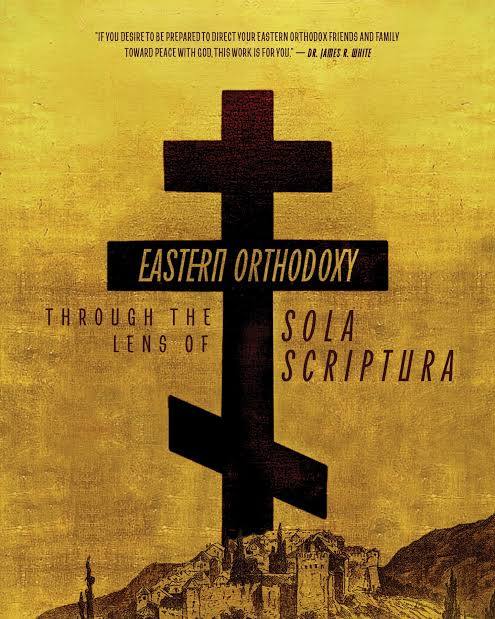
Eastern Orthodoxy: Through the Lens of Sola Scriptura
Samuel Farag
The rising trend of evangelicals converting to Eastern Orthodoxy calls for careful, biblical examination. What are we to make of the Eastern Orthodox Church? Are they our brothers and sisters in Christ? Pastor Samuel Farag, raised in the Coptic tradition yet graciously brought to the light of the gospel, examines these questions through the only sufficient, certain, and infallible standard of all saving knowledge, faith, and obedience: the Word of God.
Doctrinal Fault Lines: Authority, Icons, Mary, and the Path to Salvation
The structure of the book is straightforward. Commencing with a helpful overview, there follow nine chapters describing some of the core doctrines of Eastern Orthodoxy- authority, icons, Mariology and Saints, monasticism, theosis, and the filioque.
Farag argues that Orthodoxy is profoundly influenced by the Church’s incorporation into the Roman State by Emperor Constantine in AD 380. Membership in the Church became necessary for any who sought advancement. The Church therefore transformed from the persecuted minority to attracting those who desired influence and power. And the way to control this power was to insist on particular beliefs. This drove Church’s assertion of infallibility and final authority over all doctrines, even Scripture.
Understanding this foundation explains why Eastern Orthodoxy continues to strive today to control the narrative. They insist that they alone are the guardians of God’s truth, the authors and interpreters of Scripture and the sole provider of salvation. Orthodoxy thus insists on “sola eccelsia”— its authority overrules all others.
It does so by asserting that only “the Church” is inhabited by the Holy Spirit. Therefore, it alone knows the mind of God and can rightly interpret Scripture. “For one and the same Holy Spirit being the author of both, it is quite the same to be taught by the Scriptures and by the Catholic Church.” (p. 130 from the Council of Dositheus). Yet inevitably tradition is favoured and Scripture is sidelined in another attempt to maintain control over doctrine and people.
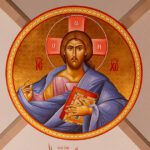
Regarding the use of icons, Farag catalogues the objections to the use of religious imagery by some of the earliest of the Church Fathers. For instance, Eusebius in 327 who wrote, “To depict purely the human form of Christ before its transformation, on the other hand, is to break the commandment of God and to fall into pagan error” (p. 84). Or Epiphanius (310-403) who understood the way sin corrupts all things when he wrote, “When images are put up the customs of the pagans do the rest” (p. 89)— these are words that could have been written today of Eastern Orthodoxy.
By venerating icons, Orthodoxy embraces a novel doctrine rather than continuity with the early Church. Farag thus convicts Orthodoxy of the very charge they level at Protestantism.
Farag proceeds to systematically describe the Orthodox doctrine of Mary and contrasts it with that in Scripture. With great passion he implores the reader to honour and imitate Mary who in her song in Luke 1 embraced her need of Jesus as she, “was clearly aware of her own sin and need for a Savior” (p. 105).
Farag also provides an insight into the ascetic heart of Orthodoxy. The idea that spiritual progress is best made through self-denial is a feature in the thinking if not the practice of every Orthodox person. One of the tragedies of Orthodoxy is that it emphasises a journey to a subjective inner emptiness instead of grasping the clear and objective truth that God has richly provided to us in his word. Instead, “in the Eastern Orthodox Church, where they believe in a synergetic relationship with God, where God merely makes it possible to be saved, they therefore must merit their own salvation out of necessity” (p. 148).
A Needed Resource for Evangelicals—and a Challenge for Orthodox Readers
I concur with Farag’s description that the value of this book is in grounding believers more thoroughly in Eastern Orthodox doctrine in so they can challenge friends with the Gospel (p. 36). I would add that will also disabuse those Christians who are unconcerned or even encourage the newfound spiritual zeal of Orthodox converts. Farag clearly describes how far Orthodoxy draws its followers from placing their complete confidence in Christ for salvation.
The book may also be of value to warn Orthodox followers and those considering converting. It will especially challenge well-read converts. Some may discover an Orthodoxy far different from what they assumed—or are willing to embrace. However, my concern is that most Orthodox readers will view this as an attack on Orthodoxy and therefore on their ethnic and cultural identity. Far better for us to present them the Gospel, informed with the understanding of Orthodoxy that this book provides.
That’s what makes this book so valuable. Not only is it well-researched and well-written, but Farag has a pastor’s heart for the lost. His aim is not to win the argument but rather that Orthodox people repent and place their full confidence in the finished work of Christ.
Finally, for those of us concerned about those of our flock being attracted by Orthodoxy, Farag offers the most fundamental advice of all.
How is the church to respond? How is the church to be a pillar of truth? It is to teach and preach the infallible Word of God. We are to teach the divine Scriptures and trust them above any other authority. Our ultimate authority was never meant to be found in an organization, but in God’s very own Word (p. 72).