






If someone asked you what’s the purpose of your quiet time, what would you say? I can easily explain what I do, but sometimes fumble when asked why. Missing purpose is often the reason our quiet times feel flat. A routine without a reason quickly becomes a rut.
What Is the Purpose?
If you were to look for the purpose of quiet times, in Scripture, where would you start? I’ve landed on the Shema:[1]
Hear, O Israel: The LORD our God, the LORD is one. Love the LORD your God with all your heart and with all your soul and with all your strength. (Deuteronomy 6:4–5)
In these words, Moses captures the heart of Israel’s relationship with God. Centuries later, when Jesus was asked which commandment mattered most, this is what he chose. As we dig into these words, they reveal something profound about the purpose of our quiet times.
Hear
God’s people are summoned by him to hear his word. God reveals himself in Scripture so that we might “hear ever anew the voice of God, for it remains the inspired Word of God.”[2] Each day when we open the Bible, we’re pausing to hear the voice of our Creator and our King speak to us.
The LORD our God Is One
He is the only God in the universe, supreme above all, incomparable, the one and only. As Daniel Block describes it, this is a “cry of allegiance”, a declaration of “complete, undivided and unqualified devotion to Yahweh.”[3] In a world filled with competing gods and shifting loyalties, God’s people are called to love and serve him alone (Deut 5:6–10).
Love
As we read the Bible, we see again and again the many ways God has shown his love—in creation, in his daily provision, in his patience with humanity, and supremely in his Son (Eph 2:4–5). The right response? To love in return, with the love he first showed us (1 Jn 4:19).
In Deuteronomy, love is used again and again to describe the covenant relationship with God. We often talk about quiet times as a duty or discipline. But at its heart, this daily rhythm is about communion, nurturing the relationship and love we already have in Christ (Eph 3:17b–19).
The LORD Your God
Our love for God grows as we come to know more of who he is—Father, Son and Holy Spirit. Each glimpse of his glory, majesty, gentleness, patience, faithfulness and goodness draws us to respond in prayer, praise, thanksgiving and worship.
Our knowledge of God is now Christ-centred. As we look to the New Testament for references to the shema, we see the apostle Paul adds in the name of Christ:
There is but one God, the Father, from whom all things came and for whom we live; and there is but one Lord, Jesus Christ, through whom all things came and through whom we live. (1 Corinthians 8:6)
As we see God’s holiness more clearly, we see our own sinfulness, leading to confession—an essential step in knowing God more deeply (Isa 6:1–5; Lk 5:8). Our natural response to God is often resistance and rebellion. We rely on Christ and the Spirit to continually open our minds to understand the Scriptures (Lk 24:45).
With All Your Heart and with All Your Soul and with All Your Strength
Our love for God is not weak or superficial, easily swayed by circumstances. As Daniel Block observes:
Calling all Israelites to love God without reservation or qualification, Moses begins with the inner being, then moves to the whole person, and ends with all that one claims as one’s own.[4]
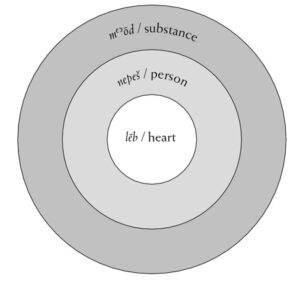
This unreserved commitment begins with the heart and extends to all of life—home, public spaces and everything in between:
These commandments that I give you today are to be on your hearts. Impress them on your children. Talk about them when you sit at home and when you walk along the road, when you lie down and when you get up. Tie them as symbols on your hands and bind them on your foreheads. Write them on the doorframes of your houses and on your gates. (Deuteronomy 6:6–9)
Our love for God involves diligent remembrance of his commands, heartfelt repetition and eagerness to speak openly about our faith. And, as we see both in Deuteronomy and Jesus’ teaching, it’s a love that shows itself in active obedience (Deut 11:1; Jn 14:23–24).
A Vision for Quiet Times
Our quiet time isn’t just a task, it’s a means of growing a deeper, richer relationship with God. Reading these verses at the start can reset our focus, reminding us of God’s generous love for us and stirring our own wholehearted love in response.
If we ate only once a day, we’d make it a feast not a snack. How much more with God’s word? Let’s not unintentionally reduce the richness of our relationship to shallow fast food spirituality. Instead let’s enjoy an unhurried, nourishing time that deepens our connection with God.
Connect the truth of God to the whole of life; store up Scripture in our hearts, letting it shape our thoughts, decisions and actions throughout the day. These truths are then woven into our conversations and relationships. We treasure, obey and live them.
The Bible calls us to love God wholeheartedly, to obey him fully, to worship him as King of the universe in every part of life. Let’s keep this bigger purpose in mind when we meet with God each day.
This was originally posted on my Substack.
[1] The first word of these verses is shema, which means hear or obey.
[2] Berkhof, Louis, Systematic Theology (1996: Eerdmans), Kindle ed., location 3236.
[3] Block, Daniel, The NIV Application Commentary: Deuteronomy (2012: Zondervan), p. 182.
[4] Block, pp. 183-5.