






Paul Brennan and Dave Jensen’s Evangelism in the Local Church is greatly needed by churches and their leaders. We know that our churches are prone to mission drift. But do we realise that church leaders are equally prone to drift, and to take our churches with us? The busyness of church life overtakes the urgent need for the lost to be saved.
I recognise that I am sometimes the cause of mission drift. My priorities bend toward the insider, while the outsider is increasingly forgotten. Our timetables and budgets shift inwardly. We lose our sense of urgency, the lostness of the lost, the wonder of God’s glorious gospel, and the reality of heaven and hell. There have been periods when regular, planned, resourced, and intentional outreach hasn’t happened at all.
Brennan and Jensen understand these struggles. They’ve been there and they’ve written this book to help. Chapter one contains this insightful reflection:
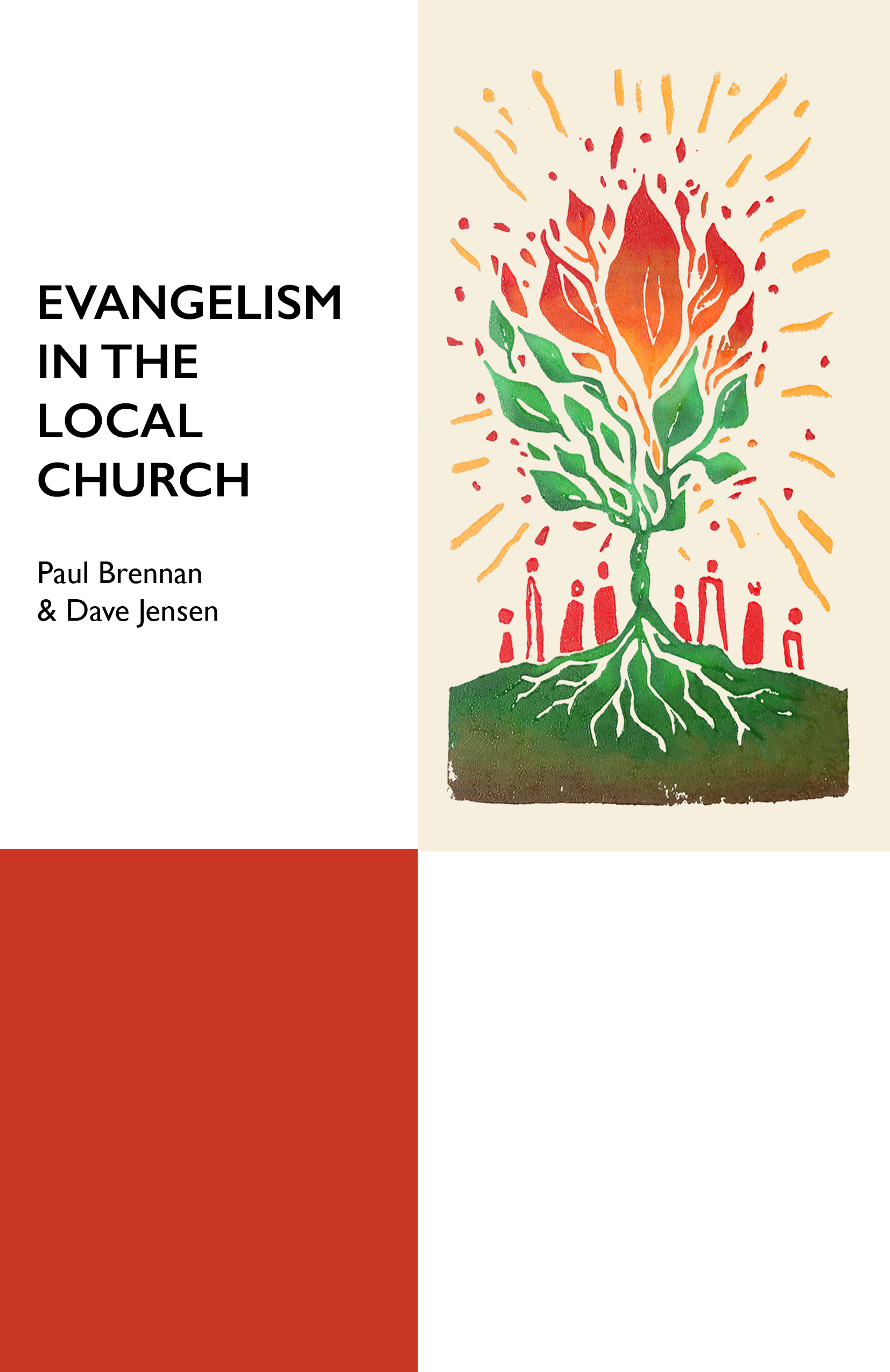
Evangelism in the Local Church
Paul Brennan and Dave Jensen
Drawing on years of hard-won ministry experience, the authors show how ordinary local churches can, under the sovereignty of God, see more people become Christians and involve more Christians in evangelism.
Grounded in Scripture and shaped by life in real churches, Evangelism in the Local Church offers realistic encouragement and practical wisdom for leaders who long to see their churches grow through the gospel.
If we never deal with the ‘why’, we will never deal honestly with why evangelism has stalled. The causes are often closer to home than we prefer to admit. It’s not simply cultural resistance. Nor simply secularisation. Nor simply apathy in the pews. Often the blockage begins with us: how we think, how we lead, how we pray, how we structure, how we speak of Christ, how we handle disappointment. Without fully grasping the magnitude of the ‘why’ of evangelism, we’ll never be too bothered about doing anything about it. This is why we begin here. Not to shame you, but to steady you. Not to criticise your people, but to help you love them. Not to depress you, but to prepare you. (pp. 33-34)
Evangelism in the Local Church is grounded in theology: the character of God, sin, judgement, the reality of eternity, the mission of Christ, the powerful transforming work of the Spirit, and the purposes of the church. Christian doctrine is not abstract and theoretical, but defines the reality in which we exist. Local churches and leaders are called to live in the light of these truths and in relation to the God who has uttered them.
Fruitfulness
We are called to pursue faithfulness and fruitfulness in evangelism (chapter two). If we are not seeing any fruit, then we should honestly ask if we are being truly faithful. Are we the problem? Evangelism in the Local Church invites us to take a good hard look at what we are doing and not doing. What ministries does our church encourage and resource? Do we have a plan to win people to Jesus? Does the church live it out? How long since a new believer was baptised because of our ministry? What percentage of our Church have become Christians in the past year? Do we even know the answers to these questions? Brennan and Jensen reveal how we must know what is happening now before we can take meaningful steps to make changes for the future.
Brennan and Jensen describe three conversions that we need to see (chapter three). The first is conversion from death to life. The second is conversion from disciple to disciple-maker. The third is conversion of the leader from discouraged to determined. They identify a 5% conversion rate as a measure of effective local church evangelism. They argue that numbers create perspective, not pressure, acting as a compass to align ministries, calendars, efforts, and expectations.
Churches that proclaim Christ clearly, cultivate pathways for unbelievers, and mobilise many believers to play their part, commonly see around 5% adult conversion growth per year. This figure is not a rule. It is not a quota. It is not a measure of spiritual maturity. It is simply a realistic picture of what often happens when evangelism is protected, prioritised and practised consistently. 5% is modest enough to be attainable, yet transformative enough to renew the whole culture of a church. (pp. 59-60)
If numbers tend to put you off, and you’re already planning to give this book a wide berth, let me urge you not to judge the book by its numbers. Numbers are only guides. The core message of this book is a call to cooperate with the plans and purposes of God, recognising that “salvation is God’s work from beginning to end. But this truth is not meant to stifle effort amongst His people. It is meant to unleash it” (p. 64).
I recognise that for some churches the important number is not five, but one. And not one percent, but one person becoming a Christian. Your goal is to see one person moving from death to life by putting their trust in Jesus. If the whole idea of 5% seems a bridge too far, then ask God to save just one person, and then one person more, and keep on praying and sharing the good news. Celebrate the new believers and plan for many more.
Practical
The ‘How’ section of this book is designed to get us moving from activity to impact (chapter four). The authors debunk a series of myths that hold us back. They call us to aim for outcomes, not simply effort. Like Jesus, we are called to seek and to save the lost. Our goal shouldn’t be merely to run events, host courses, or even simply preach a message, but to rescue the lost. The gospel must be proclaimed, and people must be called to repentance and faith. But are there better or worse ways to go about this?
The answer is yes. Creating a clear pathway for evangelism is critical. Most importantly, if churches want to see people go from death to life, they must focus explicitly and clearly on the steps that lead to conversion. The authors argue that “across churches, denominations, and cultures, the same two ministries carry the weight of evangelism” (p. 94). Churches should focus both on holding consistent evangelistic courses, and on the weekly church gathering. Regular, biblical, relational, adaptable, and continual courses, play a key part in seeing people saved.
This book is far more than good ideas. It is tried, tested, practical, and repeatable. It offers strategies for correcting mission drift and inertia. It recommends tools and tactics, but its greatest contribution is to inspire leaders and their churches to course-correct, for the sake of fulfilling Jesus’ great commission. Evangelism in the Local Church is fundamentally about alignment with the purposes of our God and Saviour.
This book does an excellent job of calling us to more effective evangelism. However, it leaves me with questions to contemplate. How do I maintain care for believers AND the call to reach the lost? How does evangelism fit into the ecosystem of ministries in the church? Should we be so definite about what works and doesn’t work? How can churches work together to encourage one another in reaching the lost?
There are more ways to measure church health than merely numbers of converts. The New Testament calls us to both win the lost and to love one another in the complexities of sin, suffering, and death. The challenges of mission drift are real, but they are not solved easily. We need to check the compass regularly, keep an eye on the tiller, and adjust course as needed. It’s hard to do, but we must keep trying.
I commend this book for all who are in Christian ministry leadership. It is provocative, but in the best way – provoking us to seek God’s glory and people’s eternal good. We need encouragement, we need refocusing, we need reminding of the urgency and gravity of the task before us, and we need practical help to lead the way.