




Megan Hill’s Sabbath Rest opens with the haunting but relatable statement, “everyone I know is longing for rest.” Sabbath Rest is part of the Disciplines of Devotion series which aims to grow women in their devotion to the Lord in the context of a busy and distracting world. I read the opening line thinking, “I know I am! I’m a Christian who knows my time belongs to the Lord. Every one of my days is written in his book. And as my Master, my time is for his glory.” But serving the Lord feels busy and often my rest feels substandard.
This book seems to take the view that the theology of the Jewish Sabbath is replaced by the Christian Lord’s Day, as a time for rest from regular work, for corporate and private worship, and for acts of necessity and mercy (Westminster Confession of Faith 21.7–8). However, even readers who hold a different will benefit from the challenges and encouragements in this book.
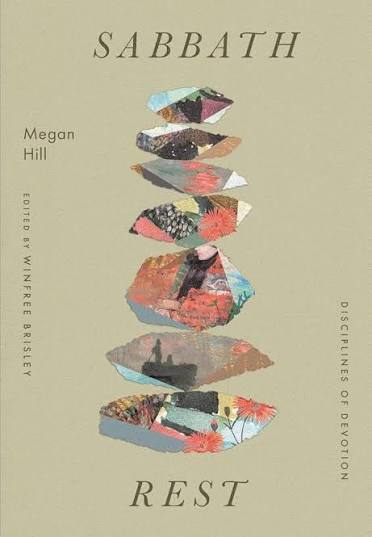
Sabbath Rest
Megan Hill
Keeping up with our do-it-all culture is not only exhausting, it can also hinder us from seeking the Lord. How can we grow in devotion to God in a world of endless distractions? TGC’s Disciplines of Devotion series helps women cultivate a life of devotion to the Lord by building simple biblical practices into their days.
A Vision for Rest
Hill encourages the reader to seek rest — described as Sabbath rest — from the hand of the Lord. This Christian view of rest is more than what our unbelieving friends and neighbours hope to gain from their next holiday. Chapter one leans into Psalm 127 to explain Christian rest. Rest is a unique gift from God designed to give respite for our souls. Hill gives an overview of the biblical teaching on Sabbath, beginning with the foundations in creation, the example of the manna, the command in the law, sabbath in the prophets, the Lord of the Sabbath, the practice of the New Testament Church, and our future rest in eternity.
The brevity of this pamphlet makes it impossible to do a deep dive survey into every passage referenced in this overview. I agree with Hill’s statement: “the trajectory of Scripture is not that the Sabbath becomes less important through redemptive history. Rather it becomes increasingly more important until it eventually becomes all that there is…” (p. 10). A theological understanding of sabbath shows that this is wonderfully true. The trajectory is toward a greater rest that sabbath only foreshadowed. This book doesn’t do a deep dive into the theology of sabbath but assumes that a practice of rest now reflects the eternal rest to come. Other readers may disagree with this view of the sabbath and the continuity between the two Testaments. But if this foundation is true, this book gives the Christian many good reasons to pursue sabbath rest. The remaining chapters are as follows: What are the Blessings of Sabbath Rest? (ch. 2), Prepare to Rest (ch. 3), Rest in the Lord (ch. 4), and Rest with the Lord’s People (ch. 5).
The Blessings of Rest
In a world which is oriented away from rest, Hill encourages readers that rest needs to be pursued and planned for. At first, it doesn’t come naturally, but in time it becomes a habit we can build on. If we build a practice of rest, we will enjoy many benefits. For example, sabbath rest orients our time (even our schedules are under the Lord’s authority), our work (it is God who provides all our needs: physical and spiritual), our allegiances (we can use this day to live out our commitment to God’s people), our priorities (sitting at the feet of Jesus is necessary), and our pilgrimage (we look back to how God has helped us and look forward to our eternal rest). Hill unpacks these blessings by merging moments of physical rest with moments of worship with God’s people and moments of service of others. She’s not only talking about physical rest. She describes her practice of sabbath rest as “setting apart one day each week to worship and enjoy the Lord.” (p. 12) This understanding of rest coincides with my own convictions about the use of the Lord’s Day for worship, rest, and service. Other readers might balk at her constant connection between rest and worship. This comes out in the next section on preparing for rest.
Preparing to Rest
The practice of preparation for the Lord’s Day is not a new concept to my family. Ever since I was a young girl, I was taught and trained to prepare for church. I am so grateful to those in my church and family who taught me to engage with the worship service: to sing when we sing, pray when we pray, read the Bible, and listen to the preaching. Preparation is one key to enjoying the rest we are given on Sundays. Hil offers a few encouragements. Prepare your work and consider what needs to happen on Saturday so you’re actually able to rest on Sunday. Prepare your body with good sleep on Saturday night. We have noticed that insisting on a good night’s sleep for our children on Saturday night has impacted our enjoyment of God on a Sunday. Prepare your soul by reading over the passage beforehand, praying, and singing some songs.
The Goal of Our Rest
Hill turns our attention off ourselves and our preparation, and onto the goal of our rest: enjoying God in chapter five. Enjoying God in corporate worship at church, growing in the Word, delighting in God with gratitude and thankfulness are ways to find rest. This third area is one I personally want to incorporate into my Sunday rest. In response to this book, I want to carve out some moments after church to sit down (or go for a walk) and thank God for all his goodness.
Resting with God’s People
Finally, Hill dives a bit deeper into the corporate nature of rest and shows that we enjoy God’s rest more fully when we are with His people. We can do good to one another’s souls by gathering, sitting together and singing, or visiting someone unable to be at church. Hospitality can be lifegiving, not exhausting. Readers are reminded to not forget our missionaries far away and to give generously and serve one another practically.
All these practical comments are incredibly helpful and applicable for Christians who just don’t know how to spiritually rest. I found this little book, written to be read in one sitting, quite helpful for young Christians who have never thought about how to make Christ the Lord of their Sundays. Jesus graciously commands his people to come to him, take his yoke upon them and find rest for their souls. Setting aside one day in seven for rest is a yoke of sorts, “and yet the Lord invites us to rest in this yoke” (p. 46). If this book could spare any more pages, some more reminders of the glory of Jesus would motivate those not yet convinced of his worth. But for Christians who know and love Jesus and long to find rest, satisfaction, and joy in him, this little book will invite you to consider whether you truly delight in God’s rest and receive this gift from him.